
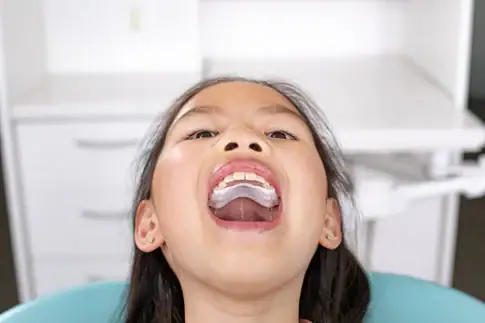
What Is a Bite Problem (Malocclusion)?
If you've ever wondered what the most common bite problems orthodontists treat actually are, you're not alone. A bite problem, or malocclusion, happens when your upper and lower teeth don't line up properly when you close your mouth. That misalignment affects how you chew, speak, and maintain your oral health over time.
According to the American Association of Orthodontists, most people have some degree of malocclusion. Nearly 50% of children develop malocclusion significant enough to benefit from orthodontic treatment. Some cases are mild and barely noticeable. Others cause real discomfort or functional issues that benefit from correction.
Orthodontists commonly treat seven main types of bite problems (malocclusion):
- Overbite (upper teeth extend too far over lower teeth)
- Underbite (lower teeth sit in front of upper teeth)
- Crossbite (upper teeth fit inside lower teeth on one or both sides)
- Open bite (front teeth don't touch when the mouth closes)
- Deep bite (upper teeth cover most or all of the lower teeth)
- Crowding (teeth overlap due to lack of space)
- Spacing (gaps exist between teeth)
What causes these issues? Genetics plays the biggest role. If your parents had bite problems, you're more likely to develop them too. Childhood habits like thumb-sucking or prolonged pacifier use can also affect jaw development. Sometimes the upper and lower jaws simply grow at different rates, creating misalignment.
How An Orthodontist Diagnoses and Treats Bite Problems
Orthodontists diagnos bite problems using X-rays, digital 3D scans, and bite analysis to classify malocclusion severity into Class I, II, or III categories, then creates a treatment plan based on each patient's specific needs.
Your first visit involves a thorough examination. It goes deeper than a quick look at your teeth. X-rays reveal tooth roots and jaw structure beneath the surface. Digital scans with iTero technology create precise 3D models of your teeth.
A bite analysis shows exactly how your upper and lower teeth meet. Bite severity falls into three categories:
| Classification | Description | Common Treatments |
|---|---|---|
| Class I | Teeth may be crowded or spaced, but the bite relationship is normal | Today's braces or Invisalign aligners |
| Class II | Upper jaw/teeth positioned too far forward (overbite) | Braces, aligners, sometimes appliances |
| Class III | Lower jaw/teeth positioned too far forward (underbite) | Expanders, braces, sometimes surgical assist |
How do braces actually fix these problems? They apply continuous, gentle pressure to shift teeth into better positions. Over time, this pressure causes the bone around tooth roots to remodel, allowing teeth to move permanently. The same principle applies to Invisalign aligners, though they work through a series of custom-fit trays rather than brackets and wires.
For children, early intervention offers unique advantages. While their jaws are still growing, orthodontists can use appliances to guide that growth. That matters. It can prevent bite problems from getting worse and may reduce the need for extensive treatment later.
Every treatment plan reflects your unique needs. What works for one patient may not be the best approach for another, even if the bite problems look similar.
Benefits of Correcting Bite Problems Early
Correcting bite problems improves chewing, reduces jaw strain and TMJ discomfort, prevents uneven tooth wear, and makes oral hygiene easier. Early correction can also prevent the need for jaw surgery later. The functional benefits often surprise patients even more than the cosmetic ones.
Chewing and Jaw Comfort
When teeth meet properly, your jaw muscles work more efficiently. Many patients notice reduced tension headaches and less TMJ discomfort after treatment. Some patients tell us they didn't even realize how much strain they were carrying until it was gone. Your bite also affects your profile and facial symmetry, and correcting jaw alignment can enhance your natural features beyond just straightening teeth.
Protection Against Tooth Wear
Misaligned teeth hit each other at odd angles. Over years, this causes chips, cracks, and excessive wear on certain teeth. Proper alignment distributes biting forces evenly, and that protection adds up over a lifetime. Straight, properly spaced teeth are also simpler to brush and floss, which lowers your risk of cavities and gum disease.
Common Bite Problems Compared: Overbite, Underbite, Crossbite & More
Understanding the differences between bite problems helps you recognize what you or your child might be experiencing.
What Is an Overbite or Deep Bite?
An overbite occurs when upper front teeth extend too far over the lower front teeth. A small overbite is normal, but problems arise when the overlap becomes excessive. With a severe deep bite, lower teeth may bite into the roof of the mouth, causing tissue damage.
How an orthodontist corrects this: Metal braces or Invisalign aligners can effectively correct most overbites by repositioning upper teeth back or lower teeth forward.
What Is an Underbite?
An underbite means the lower jaw protrudes past the upper jaw. Lower front teeth sit in front of upper front teeth when the mouth closes, affecting chewing efficiency and sometimes causing jaw pain.
What works: Mild underbites respond well to braces or aligners. Moderate cases may need palatal expanders. Severe underbites sometimes require surgical assistance combined with orthodontic treatment.
What Is a Crossbite?
Ever notice teeth that seem to close in the wrong direction? That's a crossbite, where upper teeth fit inside lower teeth rather than outside them. The problem can show up on one side or both, involving front teeth, back teeth, or a combination. Without treatment, crossbites can lead to uneven jaw growth and asymmetrical facial development over time.
The typical approach: Palatal expanders are often the first step, especially for children. Braces or aligners then fine-tune tooth positions.
What Is an Open Bite?
This one is easy to spot. When the back teeth are closed together, the front teeth don't touch at all, leaving a visible gap. Try biting into a sandwich or an apple with an open bite and you'll understand the frustration quickly. Prolonged thumb-sucking, tongue thrusting, or extended pacifier use are the most common causes.
How it's treated: Treatment addresses both the habit and the bite itself. Habit-breaking appliances may be recommended alongside braces or aligners.
What Is the Difference Between Crowding and Spacing?
These opposite problems both affect smile appearance and function. Crowding occurs when there isn't enough room in the jaw for all teeth to fit properly, causing overlap and rotation. Spacing means gaps exist between teeth.
Both conditions respond well to modern braces and Invisalign aligners. Crowding cases sometimes require creating space through expansion or extraction, while spacing cases involve closing gaps and ensuring proper bite alignment.
What Factors Affect the Cost of Bite Correction?
Bite correction costs vary based on case complexity, treatment type (braces vs. Invisalign), patient age, insurance coverage, and any additional appliances needed. Most orthodontic practices offer flexible low monthly payment plans to make treatment accessible.
Severity and treatment type are the two biggest factors. Simple crowding typically requires less time and fewer visits than a complex underbite. Today's braces, InSmile Braces (placed behind the teeth), and Invisalign aligners each carry different cost structures. The best choice depends on your specific bite problem and lifestyle preferences.
Patient age also plays a role. Early intervention in children can sometimes reduce total treatment costs by guiding jaw growth while it's happening. Adults achieve excellent results too, though it may take a different approach. Many dental insurance plans include orthodontic benefits, and coverage varies significantly between plans, so checking your specific benefits helps you understand out-of-pocket costs.
Flexible low monthly payment plans make treatment more accessible. Expanders, retainers, and other devices factor into overall investment. Retainers are essential for maintaining your results after active treatment ends.
Who Should See An Orthoodntist for a Bite Problem?
The AAO recommends children have their first orthodontic evaluation by age 7. That doesn't mean treatment starts that young for everyone. It means your orthodontist can identify developing issues and determine the ideal time to get started if needed.
Children benefit from early evaluation when they show:
- Difficulty chewing or biting
- Mouth breathing
- Early or late loss of baby teeth
- Thumb-sucking past age 5
- Teeth that don't meet properly
Teens and adults should consider a visit if experiencing:
- Jaw pain or clicking
- Difficulty chewing certain foods
- Speech issues
- Visible crowding or spacing
- Self-consciousness about smile appearance
- Teeth that have shifted over time
Mild to severe malocclusions can all benefit from modern orthodontic solutions. Even if you had braces as a teen, teeth can shift over time. Adult treatments like Invisalign aligners fit more easily into a busy schedule than many people expect.
Frequently Asked Questions About Bite Problems
What is the most common bite problem?
The most common bite problem is an overbite. It's the most frequently diagnosed malocclusion, and some degree of overbite affects the majority of the population. Mild overbites may not require treatment, but excessive overbites benefit from correction to prevent wear and improve function.
Can bite problems fix themselves?
No. Most malocclusions worsen without treatment rather than improving on their own. Teeth naturally shift throughout life, and bite problems tend to become more pronounced over time. Children's bite issues rarely self-correct.
If you notice signs of misalignment in your child, an early evaluation with an orthodontist can give you a clear picture of what's happening and whether treatment makes sense now or later.
How long does it take to correct a bite problem?
Treatment typically takes 12 to 24 months, depending on severity. Simple spacing or crowding cases may wrap up faster. Complex bite corrections involving jaw alignment often require longer treatment.
Do I need braces or Invisalign for a bite issue?
Both today's braces and Invisalign aligners can treat many bite problems effectively. The best fit depends on your specific malocclusion, severity, and lifestyle preferences. Some complex cases respond better to braces, while mild to moderate issues often work well with Invisalign aligners.
Is it too late to fix a bite problem as an adult?
Not at all. Adults can achieve excellent results with modern orthodontics, and there's no age limit for bite correction. While treatment may take slightly longer than for teens, the outcomes are just as successful. Many adults choose Invisalign aligners for their discreet appearance during treatment.