
Can Invisalign Fix a Crossbite or Underbite? What Patients Should Know
If you're dealing with a crossbite or underbite, you're probably wondering what it takes to fix it and whether Invisalign aligners can get the job done. The short answer is: in many cases, yes, can correct crossbites and underbites effectively. Below, we'll walk you through what these conditions look like, how treatment works, and what to expect along the way.
What Are Crossbites and Underbites? Understanding These Common Bite Issues
A crossbite occurs when your upper teeth sit inside your lower teeth when you bite down, instead of resting slightly outside them as they should. An underbite happens when your lower jaw extends forward past your upper jaw, causing your bottom front teeth to overlap your top teeth. Both conditions affect how your teeth come together and can create problems that go well beyond appearance.
These bite issues show up in different ways. Crossbites come in two main types. An anterior crossbite affects the front teeth, while a posterior crossbite involves the back teeth on one or both sides of your mouth. You might have a single tooth in crossbite, or the issue could span several teeth. Underbites also vary in origin. Some are dental, meaning the teeth themselves are positioned incorrectly. Others are skeletal, stemming from differences in jaw size or position.
When these bite issues go untreated, they can lead to real problems. Uneven tooth wear is common since certain teeth absorb more force than they should during chewing. TMJ discomfort and jaw soreness often develop over time. Gum recession can occur where teeth are positioned incorrectly, and some patients have difficulty chewing or speaking clearly.
How serious is your bite issue? The severity of crossbites and underbites ranges widely. Mild cases may involve just a slight misalignment that's primarily cosmetic. Complex cases can involve significant skeletal differences that affect facial structure. Figuring out where your bite falls on this spectrum is the first step to finding the right treatment for you.
How Invisalign Works to Correct Crossbites and Underbites
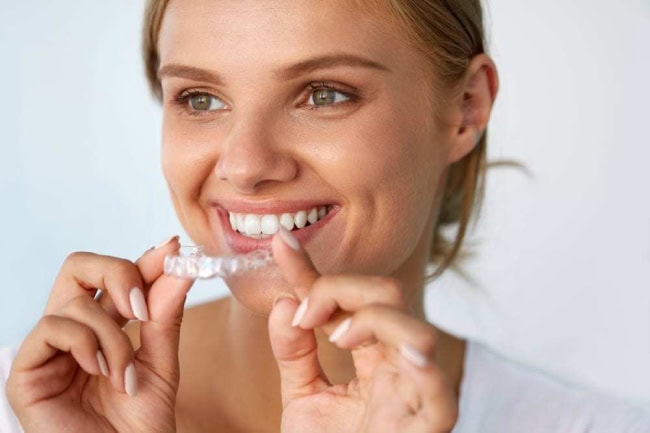
Invisalign corrects crossbites and underbites using custom Invisalign aligners that gradually reposition your teeth. Treatment typically takes 12 to 24 months and may include elastic bands for jaw adjustment. Each set of trays moves your teeth slightly, and you switch to a new set every one to two weeks. Over time, these small movements add up to significant changes in your bite alignment.
The system relies on SmartTrack material, a flexible plastic engineered specifically for tooth movement. Small tooth-colored attachments, sometimes called buttons, are bonded to certain teeth to give the extra grip. These attachments let the trays apply precise, targeted force exactly where it's needed for bite correction.
For underbite treatment, elastics (rubber bands) often play an important role. Elastics connect from hooks on your upper aligners to hooks on your lower aligners, applying gentle pressure that helps shift your jaw position over time. Not every underbite case requires elastics, but they're a common addition when the lower jaw needs encouragement to move back.
Treatment timelines for bite correction range from 12 to 24 months, though your specific case may fall outside this window. More complex bite issues take longer to resolve than simpler ones.
One advantage of Invisalign treatment is digital planning through ClinCheck software. Your orthodontist maps out the entire correction before you get started, showing you a virtual preview of how your teeth will move at each stage. This technology allows for precise treatment planning and helps set realistic expectations from the start.
What Are the Benefits of Invisalign for Crossbite and Underbite Correction?
Choosing Invisalign aligners for bite correction comes with several practical advantages worth knowing about. Here's a quick overview before we break each one down:
- Removable design for easy brushing and flossing
- Smooth, comfortable fit with no brackets or wires
- Nearly invisible appearance that blends with your teeth
- Fewer emergency visits compared to today's braces
- Digital tracking so your treatment stays on schedule
How Does the Removable Design Help With Oral Hygiene?
You take your aligners out to brush and floss normally, with no brackets or wires to work around. No special tools needed. This reduces the risk of cavities and gum problems that sometimes come with orthodontic treatment. Patients who've worn both today's braces and Invisalign aligners often say the difference in daily hygiene routines is significant. Keeping your teeth clean throughout treatment also means healthier gums and fewer setbacks that could slow your progress.
Is Invisalign More Comfortable Than Braces?
Yes, most patients find Invisalign aligners more comfortable than today's braces. The smooth plastic edges won't irritate your cheeks, lips, or tongue the way metal components sometimes do, and the removable design means you can take a break during meals. Most patients adjust to wearing them within a few days, and the absence of sharp brackets makes a noticeable difference in daily comfort. That's a big deal when you're wearing something in your mouth for a year or more.
Does Invisalign Look Better Than Braces?
The nearly invisible appearance appeals to many patients, particularly adults and teens who want to correct their bite without drawing attention to their treatment. Invisalign aligners blend with your natural teeth, making them far less noticeable than metal braces in most situations. For patients in Sandy Springs, GA who work in professional settings or simply prefer a discreet option, this is often a deciding factor.
Are There Fewer Emergency Visits With Invisalign?
Without brackets that can pop off or wires that can poke, you'll likely spend less time handling unexpected orthodontic issues. Scheduled check-ups remain important, but urgent visits become less common. Digital precision throughout treatment means your orthodontist can track your progress against the original plan and make adjustments if needed. This predictability helps keep treatment on schedule and reduces disruptions to your routine.
Invisalign vs. Braces for Crossbite and Underbite: How Do They Compare?
Both Invisalign and can effectively correct bite issues, but they each have strengths suited to different situations. Knowing these differences helps you make an informed choice about your treatment.
| Factor | Invisalign | Today's Braces |
|---|---|---|
| Best for | Mild to moderate dental crossbites and underbites | Severe skeletal cases, complex bite issues |
| Appearance | Nearly invisible Invisalign aligners | Metal or ceramic brackets visible on teeth |
| Comfort | Smooth plastic, removable | Brackets and wires may cause irritation |
| Compliance | Requires 20-22 hours daily wear | Always working, no patient compliance needed |
| Oral hygiene | Easy (remove to brush/floss) | More challenging to clean around brackets |
| Dietary restrictions | None (remove aligners to eat) | Avoid hard, sticky, and crunchy foods |
Today's braces tend to be more effective for severe skeletal underbites where significant jaw repositioning is needed. The continuous force from brackets and wires, combined with elastics and other appliances, can address complex cases that aligners might struggle with.
Invisalign handles mild to moderate crossbites and dental underbites well. When the issue stems primarily from tooth position instead of jaw structure, Invisalign aligners can achieve dream smiles that rival any braces result.
For younger patients with crossbites, palatal expanders are sometimes used before or alongside orthodontic treatment. Expanders widen the upper jaw to create proper alignment. Once expansion is complete, Invisalign or braces can fine-tune tooth positions.
Severe skeletal cases may require surgical intervention regardless of which orthodontic appliance you choose. Orthognathic surgery repositions the jaw bones themselves, and orthodontic treatment before and after surgery helps achieve the final result.
How Much Does Invisalign Cost for Crossbite or Underbite Treatment?
Invisalign for crossbite or underbite correction typically ranges from around $3,000 to $8,000, depending on case severity, treatment length, and any additional appliances needed. More complex cases require more aligners, longer treatment times, and extra visits, all of which affect the total.
Many dental and orthodontic insurance plans now cover Invisalign aligners the same way they cover today's braces, particularly when treatment is deemed medically necessary. Bite correction often qualifies as medically necessary since untreated crossbites and underbites can cause functional problems. It's worth checking with your insurance provider to understand your specific coverage before getting started.
At our Sandy Springs, GA practice, we offer low monthly payments and free initial evaluations to help patients access treatment without a large upfront cost. A payment calculator can help you understand monthly costs before you commit. When researching practices, ask about financing structures so you know exactly what to expect. Our team walks every patient through the numbers so there are no surprises.
Your treatment plan may also include elastics, attachments, or coordination with other dental work. Each of these factors can influence the final price. The goal is full transparency, so you'll know all expected costs before treatment begins. Invisalign has treated over 17 million patients worldwide, and the technology continues to improve, making it a well-established option for bite correction.
Are You a Good Candidate for Invisalign Bite Correction?
Mild to moderate crossbites and dental underbites respond best to . If your bite issue stems primarily from tooth position instead of significant skeletal differences, Invisalign aligners can likely achieve the correction you need.
Wearing your aligners consistently is essential. You need to keep them in 20 to 22 hours each day for treatment to work as planned. Remove them only for eating, drinking anything besides water, and brushing to keep your progress on track. Patients who struggle with compliance may find that today's braces, which work continuously without requiring daily decisions, are a better fit for their lifestyle.
Both teens and adults are candidates for Invisalign bite correction. is designed specifically for younger patients ages 6 to 10, addressing early orthodontic concerns including some crossbite issues. Children with developing jaws may need expanders or other appliances before or instead of aligners, though.
Severe skeletal underbites often require braces, jaw surgery, or a combination of both. When the jaw bones themselves are significantly out of proportion, aligners alone cannot create the necessary changes. This doesn't mean Invisalign is off the table entirely. Some patients use Invisalign aligners for the orthodontic portion of their treatment before or after surgical correction.
Frequently Asked Questions About Invisalign for Crossbites and Underbites
Can Invisalign fix a crossbite without surgery?
In many cases, yes. Mild to moderate dental crossbites, where the issue involves tooth position instead of jaw structure, respond well to Invisalign aligner treatment.
How long does Invisalign take to fix an underbite?
Invisalign underbite correction typically takes 12 to 24 months. Your specific timeline depends on the severity of your underbite, whether elastics are needed, and how consistently you wear your aligners. More complex cases require longer treatment.
Is Invisalign as effective as braces for bite correction?
For mild to moderate bite issues, Invisalign achieves dream smiles comparable to what today's braces deliver. Many orthodontic professionals, including those affiliated with the American Association of Orthodontists (AAO), consider Invisalign aligners an effective option for a wide range of orthodontic concerns. Severe skeletal cases may still benefit from the continuous force that braces provide, which is why a thorough evaluation matters before choosing a treatment path.
Can children use Invisalign for crossbite correction?
Yes, but it depends on the child's age and the nature of the crossbite. Invisalign First is available for children ages 6 to 10 and can address certain crossbite issues in developing mouths. Some children need palatal expanders or other appliances to correct jaw width before aligners can be effective.
Will my underbite come back after Invisalign treatment?
Your underbite shouldn't come back if you wear your retainers as directed. Retainers are essential to prevent relapse after any orthodontic treatment, including Invisalign. Your teeth naturally want to shift back toward their original positions, especially in the months right after treatment ends. Wearing your retainers consistently keeps your corrected bite stable for the long term.
If you're considering Invisalign for your bite, a Free Consult with Dr. Bennie in Sandy Springs, GA is a great place to start.