
What Is Orthodontic Tooth Movement? Understanding the Biological Process
Orthodontic tooth movement is the controlled application of light, continuous force to shift teeth into proper alignment. The process relies on your body's natural ability to remodel bone. When pressure is applied to a tooth, specialized cells called osteoclasts break down bone on the pressure side, while osteoblasts build new bone on the tension side. The constant cycle of breakdown and rebuilding is what allows teeth to move through the jawbone without causing permanent damage.
Your jawbone is constantly rebuilding itself. That's the biological trick that makes braces and Invisalign aligners work, and it's more fascinating than most people realize. It's not magic. It's biology working hand-in-hand with precise, controlled forces that your orthodontist has spent years learning to apply safely.
The periodontal ligament, or PDL, plays a central role in this process. It's a small structure with a big job. A thin layer of tissue connects each tooth root to the surrounding alveolar bone. When force is applied, the PDL compresses on one side and stretches on the other, triggering the cellular response that makes movement possible.
Think of the PDL as the biological messenger between mechanical force and your body's remodeling system. Without it, the signals that tell bone cells where to build and where to break down would never reach the right places.
Safe tooth movement requires calibrated, continuous light forces applied over time. Too much force too quickly can damage roots, cause excessive discomfort, or lead to unwanted tissue changes. Too little force won't trigger the remodeling response at all. Orthodontists complete additional years of residency training beyond dental school specifically to understand and manage this biological process predictably. According to the American Association of Orthodontists, orthodontists complete an additional two to three years of specialized training focused exclusively on tooth movement and jaw development.
How Do Braces and Invisalign Aligners Move Teeth Step by Step?
Whether you choose today's braces or Invisalign aligners, the biological process underneath is identical. Both methods apply light, continuous forces that trigger bone remodeling, allowing teeth to shift gradually into their ideal positions over weeks and months. What differs is how the force gets delivered to your teeth.
How Do Braces Work?
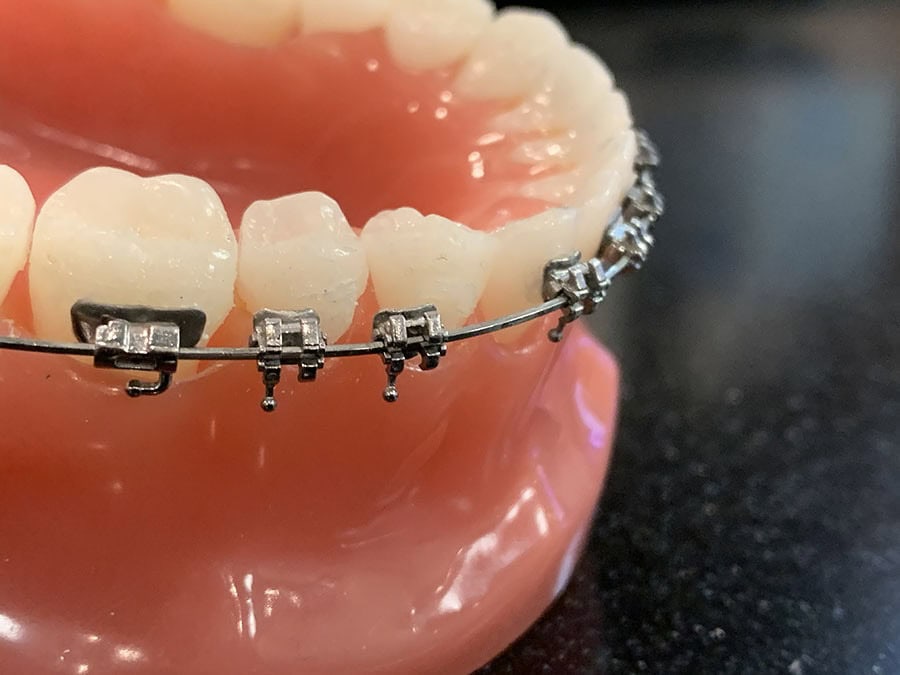
Today's braces use brackets bonded directly to each tooth and archwires that thread through them. The archwire is the engine of the system. It's made from shape-memory alloys that want to return to their original form. When bent to accommodate crooked teeth, the wire applies continuous directional force as it tries to straighten out.
Orthodontists fine-tune these forces using:
- Ligatures (tiny rubber bands or metal ties) that secure the wire to brackets
- Elastic bands that connect upper and lower teeth to correct bite issues
- Springs and power chains that close gaps or create space
- Auxiliary appliances for rotation, tipping, and bodily movement of teeth
Every adjustment visit, typically every four to eight weeks, your orthodontist evaluates progress and modifies the wire or adds new components to keep forces at optimal levels. This hands-on control makes today's braces incredibly versatile for complex cases.
How Do Invisalign Aligners Work?
Invisalign aligners use a different delivery system but trigger the same bone remodeling cycle. Each set of clear thermoplastic trays is custom-made with built-in pressure points designed to move specific teeth in specific directions.
SmartTrack material, the proprietary plastic used in Invisalign, provides consistent force throughout the wear cycle. Small tooth-colored attachments, sometimes called bumps, are bonded to certain teeth to give the aligners something to grip. These attachments help the trays apply more precise forces for movements like rotation or extrusion.
You'll change to a new set of trays every one to two weeks. Each tray moves your teeth a small amount, and the sequence of trays guides them through a planned path to their final positions. The key to success? Wearing your Invisalign aligners twenty to twenty-two hours per day, per Invisalign's own guidelines. Remove them only for eating, drinking anything besides water, brushing, and flossing.
What Do Both Methods Have in Common?
The delivery mechanism differs, but the biology is the same. Both today's braces and Invisalign aligners:
- Apply light, continuous forces that trigger bone remodeling
- Require time for the body to respond and adapt
- Need professional monitoring to make sure movement stays on track
- Can achieve beautiful, functional dream smiles when used appropriately
The choice between them often comes down to case complexity, lifestyle preferences, and what your orthodontist recommends based on your specific needs.
What Are the Benefits of Safe, Science-Backed Orthodontic Treatment?
Safe, professionally supervised orthodontic treatment protects long-term tooth health, improves bite function and oral hygiene, and delivers dream smiles more comfortably than ever before. Here's what that looks like in practice.
Long-Term Tooth Health Stays Protected
Controlled forces minimize root resorption, a condition where tooth roots shorten due to excessive pressure. By applying calibrated forces and monitoring progress at every visit, your orthodontist protects your teeth for decades to come. This careful approach also reduces the risk of enamel damage and gum recession that can result from poorly managed movement.
Straighter Teeth Mean Better Bite Function and Easier Oral Hygiene
Proper alignment reduces strain on your temporomandibular joint (TMJ) and distributes chewing forces evenly. That means less jaw discomfort, fewer headaches, and reduced uneven wear on your enamel.
Crowded or overlapping teeth also create hiding spots for plaque and bacteria. Straight teeth are simply easier to brush and floss effectively, lowering your risk of cavities and gum disease. Many patients notice a real difference in their daily oral care routine once their teeth are properly aligned.
Modern Tech Means Faster, More Comfortable Treatment
Digital treatment planning, advanced wire materials, and precision Invisalign aligners have changed the treatment process for the better. Patients spend less time in the chair and feel less soreness between visits compared to what was standard even ten years ago.
Regular visits also mean your orthodontist catches issues early. If a tooth isn't responding as expected, adjustments can be made before small problems become big ones. This level of monitoring simply isn't possible with mail-order aligners or DIY approaches.
Braces vs. Invisalign Aligners: Comparing How Each Method Moves Teeth
Choosing between today's braces and Invisalign aligners isn't about which is "better." It's about which is better for you. Braces offer maximum control for complex cases, while Invisalign aligners provide a discreet, removable option for mild-to-moderate cases. Here's how they compare across the factors that matter most:
| Factor | Today's Braces | Invisalign Aligners |
|---|---|---|
| Best For | Complex cases: severe crowding, rotations, vertical shifts, large bite corrections | Mild-to-moderate cases: spacing, minor crowding, simple bite issues |
| Visibility | Metal brackets visible; ceramic and InSmile Braces offer discreet options | Nearly invisible when worn |
| Removability | Fixed to teeth 24/7 | Removable for eating, drinking, brushing |
| Compliance | No compliance needed; braces work around the clock | Requires wearing trays 20-22 hours daily |
| Comfort | May cause soft-tissue irritation initially | Generally causes less irritation to cheeks and lips |
| Treatment Duration | Varies by case; often comparable to Invisalign aligners | Varies by case; may be faster for simpler cases |
| Adjustments | Every 4-8 weeks in the practice | Tray changes every 1-2 weeks at home |
When Are Today's Braces the Better Choice?
If you have severe crowding, teeth that need significant rotation, or complex bite issues involving vertical movement, today's braces give your orthodontist the most control. They're also ideal for patients who might struggle with aligner compliance.
When Do Invisalign Aligners Make More Sense?
For adults and teens who want a discreet option and can commit to wearing trays consistently, Invisalign aligners offer excellent dream smiles with minimal lifestyle disruption. They're great for mild-to-moderate cases and patients who prioritize aesthetics during treatment.
Your orthodontist will recommend the approach that gives you the best dream smiles based on your specific situation.
What Factors Affect the Cost of Orthodontic Treatment?
Orthodontic treatment costs depend on case complexity, treatment type, duration, additional appliances, and insurance coverage. Understanding what goes into pricing helps you plan and budget effectively. Here's a closer look at each factor.
Case Complexity and Treatment Type Drive the Biggest Differences
More severe misalignment requires longer treatment, more visits, and sometimes additional appliances. Simple spacing issues cost less than full bite corrections.
The type of treatment matters too. Today's metal braces are typically the most affordable option. Invisalign aligners and InSmile Braces (worn behind the teeth for a completely hidden treatment) may cost more due to materials and technology.
Duration, Insurance, and Low Monthly Payments All Play a Role
Duration plays a role as well. Longer timelines mean more visits, more materials, and higher overall fees. A twelve-month case will generally cost less than a twenty-four-month case. Additional appliances like expanders, accelerated treatment devices, or specialized retainers may also add to your total cost.
Many dental insurance plans include orthodontic benefits that can significantly reduce out-of-pocket expenses. Low monthly payments help make treatment accessible by spreading costs over time.
Who Is a Good Candidate for Braces or Invisalign Aligners?
Almost anyone with healthy teeth and gums can benefit from orthodontic treatment. Kids, teens, and adults are all good candidates, and the right time to start depends on your age, dental development, and specific goals.
Early Evaluation Gives Kids a Head Start
The American Association of Orthodontists recommends an initial orthodontic evaluation by age seven. At this age, your child still has a mix of baby and permanent teeth, and jaw growth is active. Early evaluation allows your orthodontist to catch potential issues like crossbites, crowding, or jaw discrepancies before they become more difficult to treat. Not every child needs early treatment, but identifying problems early gives you more options down the road.
Teens and Adults Both Get Great Dream Smiles
The teenage years remain the most common time for full orthodontic treatment. Most permanent teeth have erupted, and jaw growth can still be guided. Both today's braces and Invisalign aligners work well for teens, depending on the case and the patient's ability to comply with aligner wear.
More adults than ever are pursuing orthodontic treatment, too. If you missed out on braces as a kid or your teeth have shifted over time, it's not too late. Healthy gums and teeth are the main requirements.
Invisalign Candidates Need Consistency
Invisalign aligners require commitment. Ideal candidates are teens and adults who will reliably wear their trays twenty to twenty-two hours daily. If you're not sure you can stick to that schedule, today's braces might be a better fit.
Frequently Asked Questions About How Orthodontists Move Teeth
Does moving teeth hurt?
Mild pressure and soreness are normal, especially in the first few days after getting braces or switching to a new Invisalign aligner tray. Modern light-force techniques have made treatment far more comfortable than what your parents experienced. Most patients describe the sensation as pressure rather than anything sharp. Over-the-counter relievers can help if needed.
How long does orthodontic treatment take?
Most orthodontic treatment takes twelve to twenty-four months, according to AAO guidelines. Case complexity determines where you fall in that range. Simple spacing issues may resolve faster, while severe crowding or bite corrections take longer.
Can teeth move back after treatment?
Yes. Teeth have a natural tendency to shift back toward their original positions, especially in the first year after treatment. That's why retainers are essential for long-term dream smiles. Wearing your retainer as directed keeps your teeth in their new positions for life.
Is it safe to move teeth with DIY aligners?
Unsupervised tooth movement carries real risks. Without professional evaluation, you might miss underlying issues like gum disease, root problems, or bite imbalances. Poorly planned movement can cause root damage, worsen your bite, or create problems that require more extensive treatment to fix. The AAO strongly advises against DIY aligner treatment without orthodontist supervision.
What happens if you skip orthodontic visits?
Skipping visits slows your progress and can lead to complications. Without regular monitoring, forces may become uncontrolled, potentially causing harm to roots or soft tissue. Wires can become less effective over time, and Invisalign aligners won't track properly if teeth aren't moving as planned. Staying on schedule keeps your treatment safe and efficient.
Why does professional orthodontic care matter so much?
The science behind tooth movement is precise, and getting it right requires years of specialized training. Dr. Bennie and the team at Artemis Smiles Orthodontics monitor every stage of your treatment to protect your roots, your gums, and your long-term oral health. That level of care is something no mail-order kit can replicate. Your Best Smile Starts Here, and it starts with the right team behind you. Ready to take the first step? Request free consult and find out what's possible for your smile.